
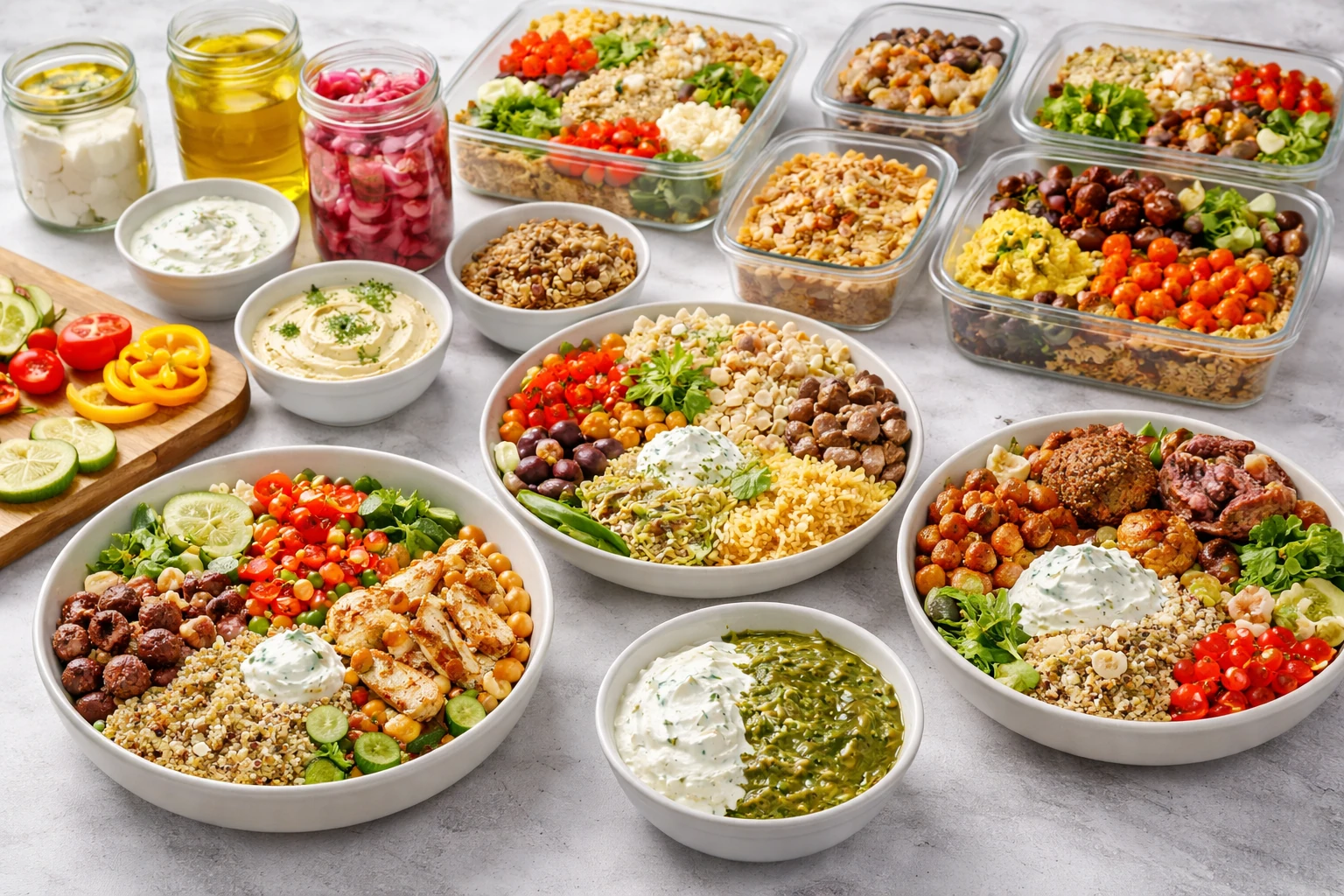
A good Mediterranean bowl does not need to be complicated, but it does need structure. When the base, the center, the fresh elements, and the finish all have a clear role, the meal feels balanced without becoming crowded. That is what makes Mediterranean bowls so practical for everyday cooking and so easy to repeat through the week.
This guide explains how those parts work together so you can build bowls that feel flexible, satisfying, and easy to adjust.
The Base: Grains That Form the Foundation of a Bowl
Most Mediterranean bowls begin with a base that gives the meal shape and support. This is often where the bowl gets its steadiness. The base helps hold the rest together and keeps the meal from feeling scattered.
Common choices include bulgur, quinoa, couscous, rice, lentils, or even greens when you want something lighter. Each one changes the feel of the bowl a little. Some feel softer and warmer. Others feel lighter and more open. The important thing is not choosing the most impressive base. It is choosing one that supports the rest of the bowl well.
A stronger base often makes the difference between a bowl that looks fine and a bowl that actually feels complete. That same idea connects naturally with How Many Components a Good Bowl Actually Needs, because bowls usually work better when each part has a job instead of filling space.
The Center: The Ingredient That Gives the Bowl Its Direction
Once the base is in place, the bowl needs a center. This is the ingredient that gives the meal its identity. It might be chicken, tuna, lentils, chickpeas, white beans, roasted cauliflower, or another substantial ingredient that leads the bowl.
This is often where people overcomplicate things. A bowl does not need too many main elements. It usually needs one clear center and supporting parts around it. When that center is missing, the meal can feel weak. When it is clear, the bowl becomes easier to build and easier to repeat.
That is why How to Build a Mediterranean Bowl Around One Main Ingredient is such a useful approach. Once one ingredient leads the meal, the rest of the decisions become much simpler.
Freshness, Contrast, and Texture
After the base and the center, the bowl usually needs freshness and contrast. This is where chopped cucumber, tomatoes, herbs, onions, greens, olives, or lightly cooked vegetables come in. These parts keep the bowl from feeling flat, heavy, or too uniform.
Freshness is not only about raw vegetables. Sometimes it comes from herbs, lemon, or a cool spoon of yogurt. Sometimes texture matters just as much as freshness. A bowl can need crunch, softness, creaminess, or a little brightness at the end.
When something feels slightly off, the problem is often here rather than in the main ingredients. That is where When a Bowl Needs Acid, Creaminess or Crunch becomes especially useful, because it helps you adjust the bowl without turning it into something overloaded.
Protein, Substance, and Support
Not every bowl that feels light is missing protein. Some bowls already have enough protein but still feel too slight because they need more body underneath. Others have grains and vegetables but no strong center, so they need a better source of protein or a more substantial ingredient.
That difference matters because it changes the fix. Sometimes the right move is adding chickpeas, eggs, tuna, chicken, or lentils. Other times, the better answer is bulgur, quinoa, roasted vegetables, hummus, or another element that gives the bowl more support.
This is exactly why When a Bowl Needs More Protein and When It Just Needs More Substance matters inside the bowl system. It helps you understand what the bowl is actually missing instead of just adding more food at random.
Sauces and Finishes That Bring the Bowl Together
A bowl usually needs some kind of finish to feel complete. This can be a spoon of yogurt, a lemony dressing, tahini, olive oil with herbs, or a few olives and crumbled feta. The finish is often the part that pulls the whole bowl together.
It does not need to be heavy or complicated. In many cases, a small finish does more for the bowl than an extra topping. It can soften sharper ingredients, brighten warm ones, or create a cleaner contrast between the base and the center.
A good finish should support the bowl, not take it over. That is one reason Mediterranean bowls often feel balanced even when they stay simple.
Warm and Cold Bowls from the Same Core Ingredients
One of the most useful parts of this system is that the same ingredients can move in different directions. A bowl with grains, chickpeas, herbs, vegetables, and yogurt can feel warm and grounding one day, then cooler and lighter the next, depending on what is reheated, what stays fresh, and how the bowl is finished.
That flexibility is part of what makes Mediterranean bowls so practical for meal prep. You do not need two completely different ingredient lists to avoid repetition. You often just need a different emphasis.
That idea is explored more clearly in How to Build Warm and Cold Mediterranean Bowls from the Same Core Ingredients, where the same basic setup becomes useful in more than one way.
Meal Prep: Building Bowls Through the Week
Mediterranean bowls work especially well for meal prep because the system is easy to repeat. A batch of grains, one or two proteins or substantial ingredients, chopped vegetables, herbs, and a simple sauce can carry several meals without making them feel identical.
This does not mean every bowl should look the same. The point is to prepare useful parts, then combine them with a little variation. One day the bowl may be warmer and softer. Another day it may be brighter and fresher. One day the center may be chickpeas. Another day it may be chicken or lentils.
That same logic also connects naturally with How to Build 3 Different Lunch Bowls from One Tray of Roasted Vegetables. Good meal prep is not just about storing ingredients. It is about using them in ways that still feel worth eating.
Building Your Own Mediterranean Bowl
A useful Mediterranean bowl often comes together through a simple pattern:
- one base
- one clear center
- one fresh or soft contrast
- one finish that brings everything together
That is often enough. You do not need endless variety or too many components. You need parts that make sense together.
Once you understand how the base, the center, the fresh elements, and the finish work together, Mediterranean bowls become much easier to build and much easier to repeat through the week. That is what makes the system so useful: not endless variety, but clear structure that can still move in different directions.