
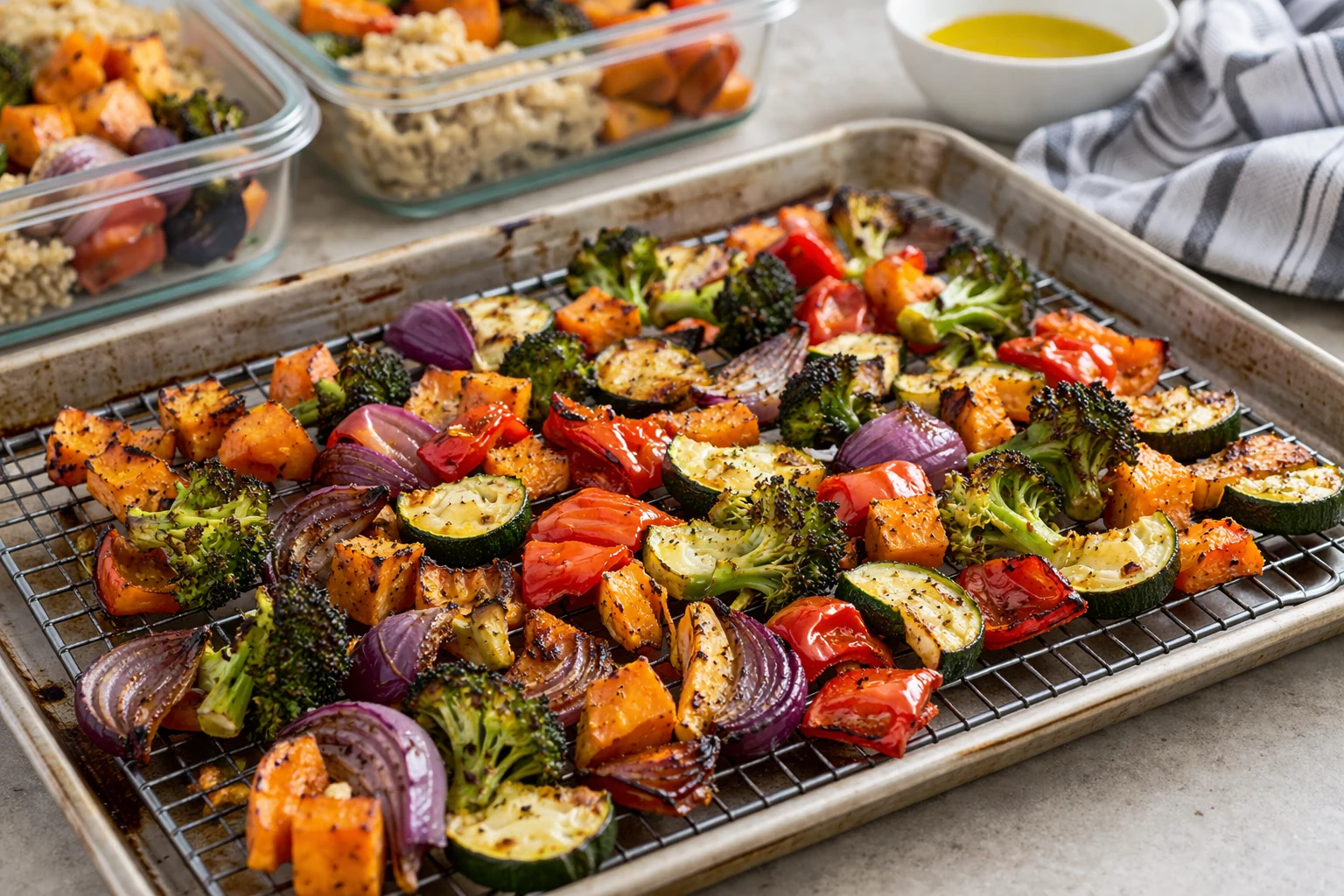
Roasted vegetables often look perfect on the tray, then turn soft and damp by the next day in the fridge. Usually, the problem is not the vegetable itself. It is the way the vegetables are roasted, cooled and packed. If you want meal prep bowls to stay fresh, these small details matter more than people think.

Where roasted vegetables usually go wrong
Most wet roasted vegetables start with one of three problems: too much moisture before roasting, too much crowding on the tray, or too much trapped heat during storage. Any one of those can turn a good batch into vegetables that feel soft, collapsed and slightly watery by the time you open the container.
The first thing to check is the vegetable itself. Zucchini, mushrooms, tomatoes and eggplant all release a lot of water. That does not mean you should avoid them, but it does mean you need to roast them with more care than vegetables like broccoli, cauliflower, carrots or peppers. Wet vegetables need more space, stronger heat and more time to release moisture properly.
The tray setup also matters. If the vegetables are too close together, they steam instead of roast. That is where texture starts to disappear. A tray should look slightly underfilled, not tightly packed. When pieces have room around them, moisture can escape instead of collecting underneath. That single change often helps more than any seasoning trick.
Cut size makes a difference too. If some pieces are tiny and others are thick, the smaller ones soften fast while the larger ones stay undercooked and wet inside. Try to keep the vegetables close in size so they roast at a similar pace. This gives you a more even batch and makes it easier to stop cooking at the right moment.
Oil is another place where people overdo it. A light coating helps vegetables roast well, but too much oil can mix with released water and leave the tray glossy and heavy. You want the vegetables lightly coated, not coated to the point where they look drenched before they even go into the oven.
Cooling is the step many people skip, and it is one of the main reasons meal prep vegetables turn wet later. If you move hot roasted vegetables straight into a closed container, trapped steam has nowhere to go. It condenses on the lid and falls back onto the vegetables. Let them cool fully on the tray first, or even better, transfer them to a rack or wider plate so extra heat can escape faster.
Storage is the final test. Roasted vegetables should not always sit directly on top of grains or greens if they are still slightly warm. That moisture moves downward and affects the whole bowl. It is often better to keep them in a separate section or let them cool completely before building the container. This works especially well if you are also trying to solve issues covered in How to Keep Meal Prep Bowls Fresh for 4 Days.
A good practical test is this: after roasting, the vegetables should feel lightly dry on the surface and hold their shape when lifted with a spoon. If they look shiny, collapsed or watery on the tray, they will usually get worse in the fridge, not better. That is why roasting time should be judged by texture, not only by color.
For higher-moisture vegetables, it can help to salt lightly after roasting instead of before. Salt pulls water out, and for some vegetables that extra release is not useful at the start. You can also roast wetter vegetables separately from firmer ones so each tray behaves the way it should.
In the end, keeping roasted vegetables from turning wet in meal prep is less about one perfect trick and more about controlling moisture at every stage. Give them space, use enough heat, let them cool properly and pack them only when they are ready. The difference is noticeable, especially by day two or day three, when texture usually starts to fall apart. For a broader food-safety and storage mindset around cooked vegetables and leftovers, the USDA guide to leftovers and food storage is also a useful reference.
Leave a Reply